
The vacuum bell is a natural, non-surgical method for correcting pectus excavatum (chest wall depression)

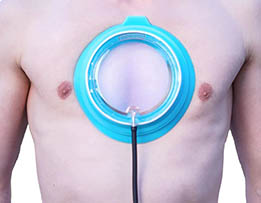 A vacuum bell is a collective term for a group of external devices made of thick acrylic glass with a corner connector in its central part, necessary for attaching a hose, which in turn connects to a bulb that creates a vacuum inside the bell. It also includes a thick layer of flexible food-grade silicone (the thickness of the silicone layer varies depending on the model type and the degree of chest deformation).
The principle of operation of the device involves the vacuum inside the bell being strong enough to overcome the resistance from bones, cartilage, and ligaments, which collectively form the chest depression. However, internal muscles, including the diaphragm and pectoral muscles, strive to maintain the deformation of the chest by pulling it inward. The vacuum bell also stretches these muscles to relax their tension.
Bending Moments:
These bending moments transform the cartilaginous ends, rib curves, and both mobile joints of the sternum bones. Correction of the chest depression primarily occurs through this transformation.
The elevation of the chest depression is a three-part process affecting the bones, cartilage, and ligaments of the chest:
Until these ruptures heal, the patient's chest will experience a slight temporary loss of chest cage rigidity.
Demonstration of the vacuum bell's operation on a chest organ computer tomography Often, patients seek consultation at the clinic with little understanding of the specifics of how the vacuum bell works. In such cases, the clinic's orthopedic specialist recommends a consultation with a thoracic surgeon who specializes in the treatment (surgical and non-surgical) of chest deformities. Most patients come for their initial consultation without a chest organ computer tomography scan, which allows for the immediate demonstration of the vacuum bell's effect.
It is important to conduct the initial examination WITHOUT the bell, as the effect of even brief exposure to it persists for an extended period.
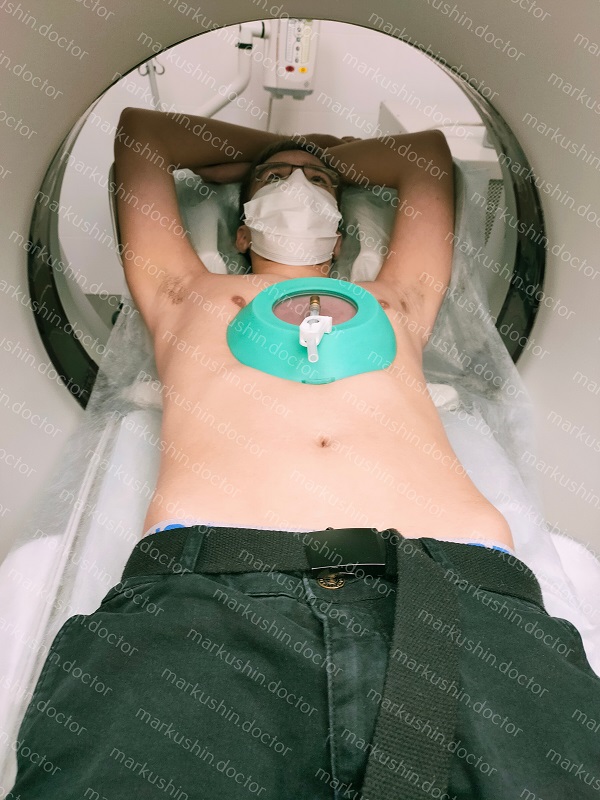
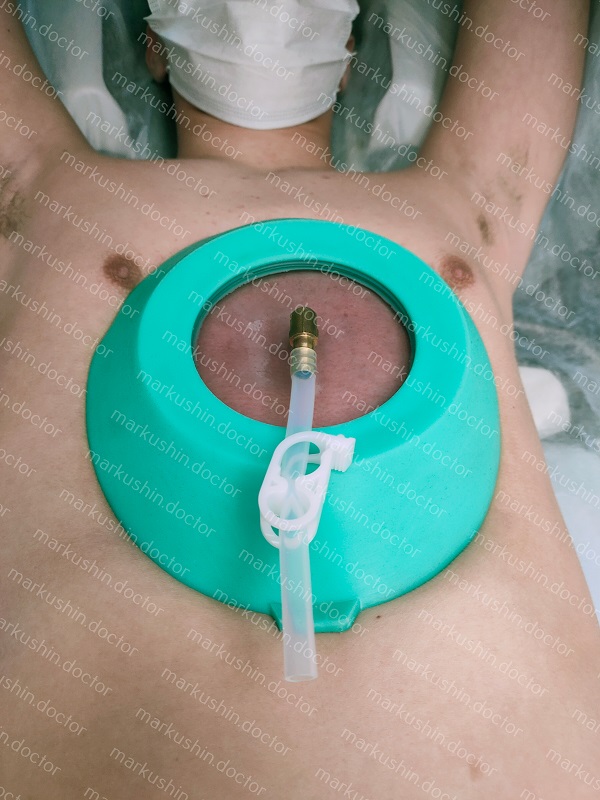
Such a visual demonstration guarantees the maximum awareness of the patient and his parents and motivates for a long and adequate wearing of the vacuum bell according to the proposed method.
This video presents an examination of the same patient with a 5-minute difference. On the left is the examination BEFORE the activation of the vacuum bell, and on the right is AFTER the activation of the vacuum bell. Several effects of the vacuum bell's operation are immediately visible: Complete correction of the pre-existing funnel-shaped deformation of the chest at the center of the bell's influence. Flattening of the front segments of the ribs in the area affected by the silicone rim of the vacuum bell. This demonstration method is highly convincing for many patients and parents because, in most cases, there is a healthy skepticism about vacuum correction and a lack of understanding of the principles of how the bell works, especially when seeking online consultations. The demonstration using a chest organ CT scan with the bell, showing the movement of the chest-wall complex when the vacuum is activated inside the bell along with all the tissues above it, allows a full understanding of all the intricacies of the vacuum bell's operation, particularly when the patient's parents can see it on the computer tomography apparatus screen during the clinic consultation.


 Customer support
Comments area
No comments yet