
The vacuum bell is a natural, non-surgical method for correcting pectus excavatum (chest wall depression)

 Computed tomography (CT) is used by doctors to determine the Haller index, which is calculated by dividing the frontal diameter of the chest by the sagittal diameter. In normal cases, the Haller index (HI) is around 2.5. A HI ≥ 3.25 indicates a medical indication for surgical correction of pectus excavatum.
CT scans can assess the asymmetry of deformation, the degree of lung compression, and the extent of compression and displacement of the heart within the chest cavity, all of which need to be considered when planning surgical treatment. For better visualization of the chest organs, contrast-enhanced CT scans may be necessary during preoperative planning.
Read more...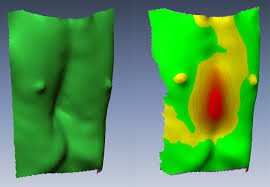 The causes of pectus excavatum (PE) are unknown. It is likely that the deformity is genetically influenced and occurs in about 35% of cases within families. Doctors often observe abnormal growth of the costal cartilage, which is believed to be related to the development of the deformity. It has also been noted that the severity of the deformation is influenced by the diaphragmatic sternal (chest) attachment. The extent of the deformity depends on the degree of its dysplasia (immaturity). Based on the above, physical activities that increase the frequency and volume of breathing contribute to the enlargement of the deformity in children and adolescents. However, there is no scientific evidence to support this theory.
 Functional disorders refer to disruptions that hinder the normal functioning of the body. For example, pectus excavatum deformation (PED) leads to a reduction in chest volume, which in turn affects the essential functions of internal organs. Some patients with PED report chest pain or discomfort in the thoracic spine. The cause of these pains is unknown, but it is presumed that they arise due to postural issues frequently observed in patients with PED.
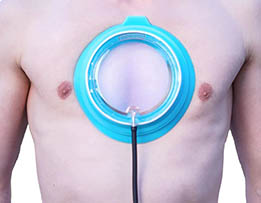 A vacuum bell is a collective term for a group of external devices made of thick acrylic glass with a corner connector in its central part, necessary for attaching a hose, which in turn connects to a bulb that creates a vacuum inside the bell. It also includes a thick layer of flexible food-grade silicone (the thickness of the silicone layer varies depending on the model type and the degree of chest deformation)


 Customer support